


Rent receipts, insurance or mortgage contracts, bills, payslips…Everyday documents are numerous. Did you know that the minimum retention period for these papers varies depending on their nature, applicable legislation, or their intended purpose?
Here is an overview of document retention periods.
Why Should You Keep Your Personal Documents?
The purpose of keeping personal documents is to be able to prove the existence of a right or compliance with an obligation. Retention periods vary depending on the type of document and the legislation or use to which it is subject.
Some administrative documents must be kept for life, while others have shorter retention periods set by law.
Please note that the periods mentioned in this article are recommended retention periods. You may, of course, choose to keep documents for longer.
How Long Should You Keep Your Documents?
Documents Related to Your Family Situation and Education
Documents relating to family law matters should generally be kept permanently, in particular:
- civil status certificates (full copies and extracts),
- divorce or adoption judgments,
- marriage contracts and civil partnership agreements (PACS),
- family record books,
- exam certificates and diplomas,
- medical examinations (e.g. X-rays).
Documents Related to Insurance and Banking
In insurance matters, receipts, due notices, and cancellation letters must be kept for at least two years from the document date, as must insurance contracts.
For banking documents, cheques must be cashed no later than one year and eight days after issuance.
Bank statements and cheque stubs must be kept for five years.
Receipts for card payments and withdrawals should be kept until you receive the bank statement showing the corresponding balance.
Your Bills
Electricity, gas, and water bills must be kept for five years, which corresponds to the period allowed to dispute a bill with the supplier.
It is recommended to keep landline, mobile phone, and internet subscription bills for at least one year.
Bills for household appliances (dishwasher, refrigerator, television) should be kept at least until the warranty period expires, as should warranty certificates.
For health-related documents, bills from public hospitals must be kept for four years and from private hospitals for two years. Reimbursement statements from health and maternity insurance should be kept for at least two years.
Documents Related to Your Home
Proof of payment of condominium fees, correspondence with the property manager, and minutes of general meetings must be kept for five years.
Rent receipts, lease agreements, and check-in and check-out inspection reports must be kept for three years after the end of the lease. These periods apply to both unfurnished and furnished rentals.
A deed of sale or title of ownership, however, must be kept permanently.
Documents Related to Your Professional Activity
Payslips, employment contracts, and work certificates must be kept until retirement.
Certificates from France Travail (formerly Pôle emploi) must be kept for two years from the date of registration as a job seeker.
Final settlement statements, proof of unemployment benefit payments, or expense reports must be kept for three years. These documents are useful when calculating pension rights.
Note:
Private employers must keep employees’ payslips, employment contracts, and any declaration of workplace accidents to health insurance for five years.
Other documents, such as working time records or tax certificates, must be kept for three years.
Documents Related to Your Taxes
Tax returns, tax assessments, and supporting documents used for taxation must be kept for three years from the year following the income year.
Property taxes and local taxes (e.g. housing tax on secondary residences) must be kept for one year.
Retention Period for Documents Related to Your Business
Books, registers, documents, or supporting records that the tax authorities may request must be kept for six years.
The period is calculated from one of the following dates:
- the last transaction recorded in the books or registers,
- the date the documents were issued.
Example:
Documents relating to income for 2018, declared in 2019, must be kept until the end of 2024.
Overview of Retention Periods for Tax Documents
| Type of Tax | Retention Period |
|---|---|
| Income tax (IR) and corporate tax (IS) | 6 years |
| Business income (BIC), non-commercial income (BNC), and agricultural income (BA) under the actual regime | 6 years |
| Corporate tax for sole proprietorships and companies | 6 years |
| Local direct taxes (property tax, etc.) | 6 years |
| Business tax (CFE) and CVAE | 6 years |
| VAT and other turnover taxes | 6 years |
Warning:
The retention period is extended to 10 years in cases of concealed activity (tax fraud, undeclared work, failure to declare, illegal activity, etc.).
Social Documents Related to Your Business
| Document Type | Retention Period |
|---|---|
| Annual financial statements (balance sheet, income statement, notes) | 10 years from the end of the financial year |
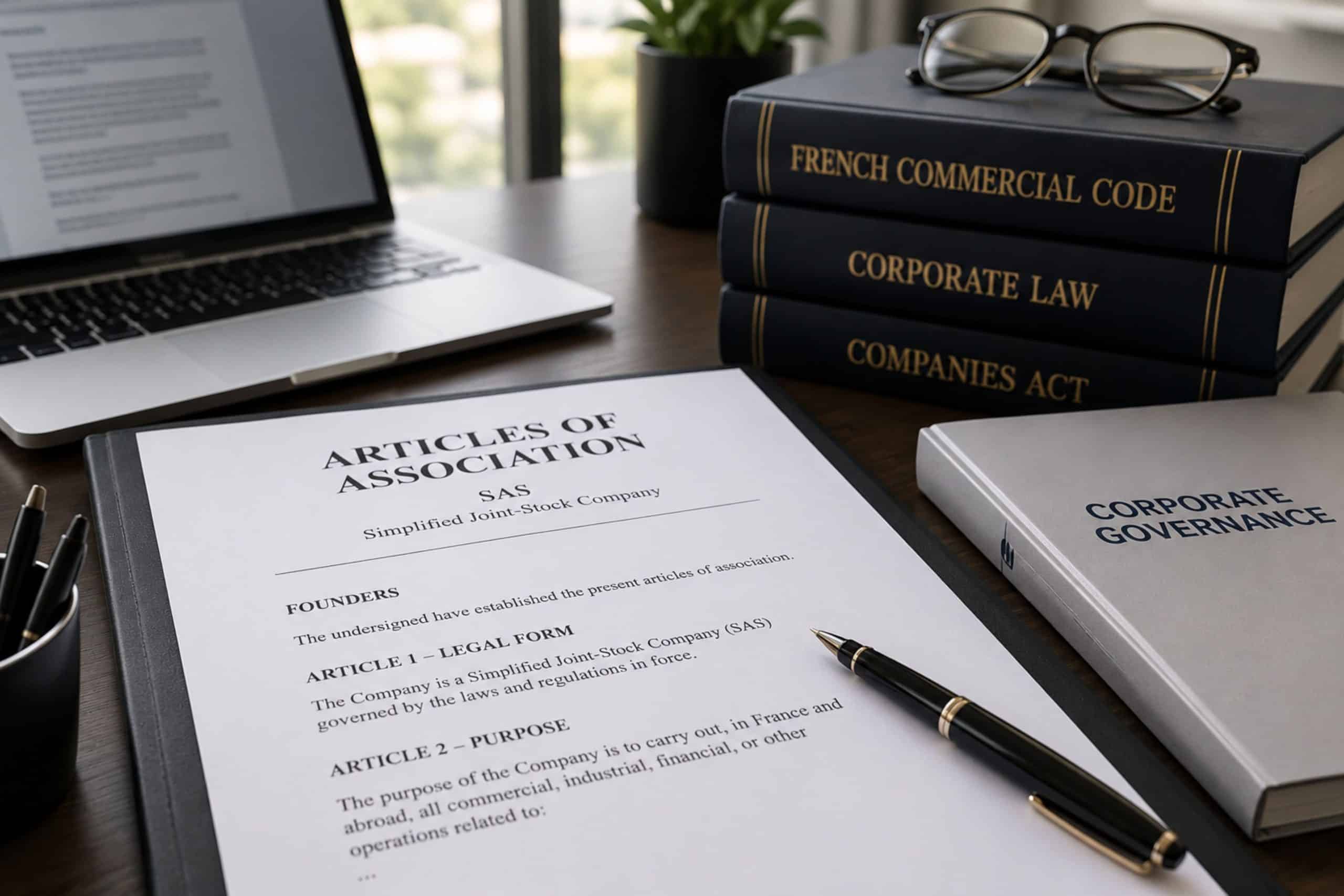
| Articles of association for companies, economic interest groups (GIE), or associations | 5 years after dissolution |
| Merger agreements and similar documents | 5 years |
| Share registers, transfer registers, and general meeting minutes | 5 years after last use |
| Attendance sheets and proxies | Last 3 financial years |
| Management reports | Last 3 financial years |
| Audit reports | Last 3 financial years |
Personnel Administration
| Document Type | Retention Period |
|---|---|
| Payslips | 5 years (electronic: 50 years or until the employee reaches 75 years of age) |
| Personnel register | 5 years after the employee leaves |
| Documents relating to hiring, salary, bonuses, benefits, pensions | 5 years |
| Social contributions and payroll taxes | 3 years |
| Working days under fixed salary agreements | 3 years |
| Working hours and on-call duty | 1 year |
| Labour inspectorate notices and inspections | 5 years |
| Declaration of workplace accidents | 5 years |
In What Format Should You Keep Your Personal Documents?
Are you unsure whether to keep your documents in paper or digital form? Do both formats have the same legal value?
It depends on how the document was delivered:
- if it was received digitally (by email or download), it may be kept digitally;
- if it was received in paper form (in person or by post), the original must be kept. A scan is considered only a copy, and the original may be required later.
Taxpayers may also digitize their paper bills upon sending or receipt and store them electronically until the end of the tax retention period (six years).
Med venlig hilsen / Kind regards
Cabinet Nicolas BRAHIN
Advokatfirma i NICE, Lawyers in NIC
Camilla Nissen MICHELIS
Assistante – Traductrice
1, Rue Louis Gassin – 06300 NICE (FRANCE)
Tel : +33 493 830 876 / Fax : +33 493 181 437
Camilla.nissen.michelis@brahin-avocats.com
www.brahin-avocats.com